

Content block block-1441568469-1775763258
An integrated pest management (IPM) program is a long-term, multi-faceted system that establishes economic thresholds and control strategies for pest populations. The University of California defines IPM as “a strategy that focuses on the long-term prevention of pests or their damage through a combination of techniques, including preventative, cultural, mechanical, environmental, biological, and chemical control tactics.”
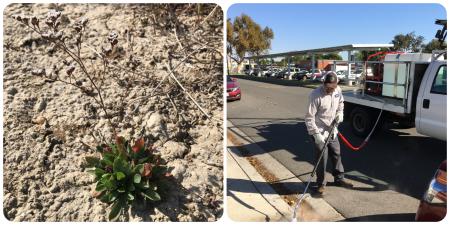
Orange County Public Works utilizes an IPM program to evaluate pest incidence and to carefully select the appropriate tools or actions for the control of the identified pest; appropriate to the pest, incident location, and setting and extent of the problem. This program begins with a pre-control inspection to identify pests and their populations, and a determination as to whether control actions are necessary. When control is needed, the least impactful option that is feasible is implemented. Non-chemical control methods are considered first, including cultural, mechanical, and biological means. If necessary, chemical control methods are used as the last option, using the lowest effective dose to achieve acceptable results.
Program Goals
Each of the following are essential goals of OCPW’s IPM unit and are used for decisions regarding managed facilities:
Flood Risk Mitigation
Maintain flood control channel capacity and meet US Army Corps of Engineers safety rating requirements for disaster relief eligibility. Controlled pests include vegetation and burrowing rodents to maintain structural integrity and functionality.
Motorist Safety
Federal and state transportation guidelines dictate that areas along road shoulders, signage, and intersections must be kept clear of impediments such as vegetation and weeds. Management ensures line of sight for traffic and fire safety.
Fire Safety
Protect life and property by maintaining adjacent buffers to structures and property free of vegetation conditions prone to wildfires.
Habitat Preservation
Regulatory permit compliance with habitat and protected species, control of invasive species to reduce impact of non-native plants on natural communities.
Public Health
Decrease risk of pest-borne diseases within the community through mitigation and habitat suppression. This includes Increasing water flow to reduce mosquito breeding conditions.
Aquatic Pesticide Applications
As determined by the County’s Pest Control Adviser, pesticide applications are performed in waterways. For more information regarding these aquatic applications please visit the Aquatic Herbicide Applications page.